

Used at the right dose, magnesium supplements for sleep can modestly help some people fall asleep and stay asleep. They work best if your diet is low in magnesium, your mind races at night, or leg cramps wake you. They are not a sedative, and the research is small and mixed. Magnesium glycinate is the best first form for most people. A sensible start is 100 to 200 mg of elemental magnesium, taken 30 to 60 minutes before bed.
Magnesium is a mineral your nerves, muscles and hormone systems depend on. It helps balance the brain chemicals that keep you alert or relaxed, and it plays a part in making melatonin. This article covers why that matters, how to take magnesium step by step, which form to choose, and who should talk to a professional first.
At Moore's Pharmacy, an independent pharmacy serving customers since 1965, our pharmacists field these questions all the time. What follows is the plain-language answer we give.
Why magnesium supplements matter for sleep
Magnesium supports sleep by calming nerve signaling and contributing to melatonin production. The benefit of a supplement is real but modest, and it is largest when you are short on the mineral. This is relevant because most people are moderately to severely deficient in magnesium due to stress. Our stressful daily lives deplete our bodies of many nutrients two of which are magnesium and B vitamins.
How magnesium influences sleep
Your brain uses excitatory and relaxing chemical messengers. Magnesium helps keep the two in balance, so at night it may tilt you toward the relaxing side. It also plays a role in making melatonin, the hormone that rises as it gets dark. For people whose sleep breaks up because of leg cramps or restless legs, relaxing the muscles by taking magnesium may help too.
Magnesium does not work like a sleeping pill. Melatonin tells your body what time it is. Magnesium is background support, and people who benefit usually describe feeling less tense rather than being knocked out.
What the research shows
Studies are small and results are mixed. A 2025 review of magnesium and sleep disorders in the NIH's PubMed Central archive found that supplements improved sleep measures in several sleep-related conditions. A pooled analysis of a few small trials in older adults found people fell asleep somewhat faster, but the authors rated the evidence as low quality. Many studies are short, use different forms and doses, and enroll specific groups.
Magnesium is a modest, low-risk sleep support, not a proven treatment for insomnia.
Who is most likely to benefit
You are a better candidate if one of these fits:

- Your intake falls short. Adult men need about 550 to 750 mg a day and women about 450 to 600 mg, from food and supplements together.
- Your thoughts get louder at bedtime, even when you cope well during the day.
- You wake with nighttime leg cramps.
A standard blood test reflects only a small fraction of your body's magnesium, so diet and symptoms are the better guide, unless your doctor runs a magnesium RBC lab test. Pumpkin seeds, almonds, spinach and black beans are good food sources to check first.
How to take magnesium supplements for better sleep
Start with 100 to 200 mg of elemental magnesium, 30 to 60 minutes before bed. Raise it only if you need to, and judge the result after several weeks.
Dose and ceiling
You will see advice ranging from 200 to 500 mg. The NIH Office of Dietary Supplements sets a tolerable upper limit of 350 mg per day for magnesium from supplements in adults. Unfortunately, that recommendation does not look to promote optimal levels but only minimum daily requirements. Consult with our pharmacist for amounts that may be appropriate for you, remember any type of kidney issues requires you to discuss this with the doctor treating your kidney health because you will need lower doses due to kidney impairment.
Here is a worked example. Say the label lists 100 mg of magnesium per capsule. Two capsules at bedtime gives you 200 mg, comfortably under the ceiling. If you feel no change after two weeks and your stomach is fine, a third capsule brings you to 300 mg.
Timing and a fair trial
Magnesium builds up in the body, so give it time. Follow these steps:
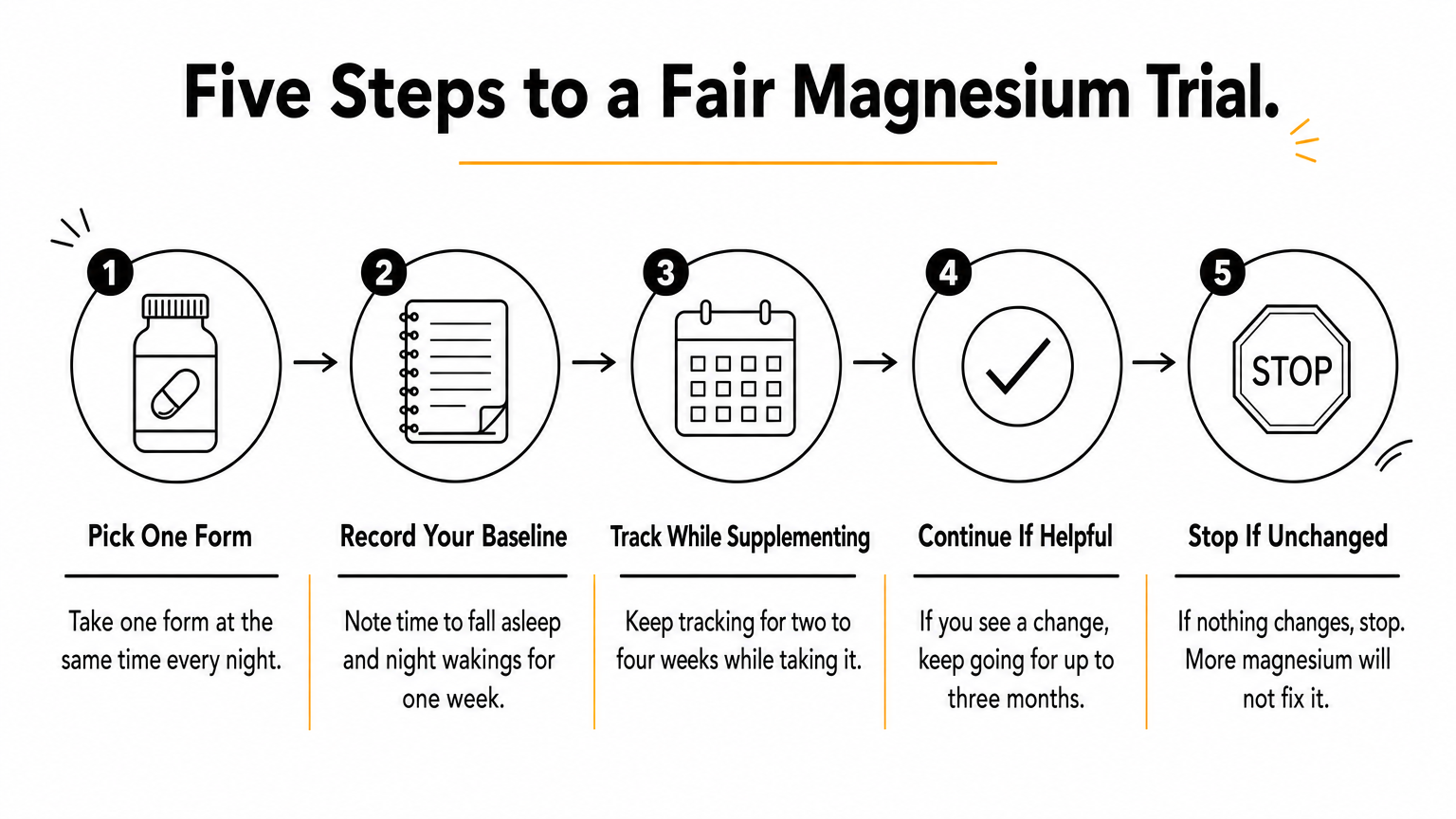
- Pick one form and take it at the same time every night.
- Note how long it takes you to fall asleep and how often you wake for a week beforehand.
- Keep tracking for two to four weeks on the supplement.
- If you see a change, continue. Some clinicians suggest trying nightly for up to three months before deciding.
Pair the supplement with the basics: a regular bedtime, less caffeine and alcohol, and screens off before bed. For chronic insomnia, cognitive behavioral therapy for insomnia (CBT-I) is the first-line treatment, and a supplement is an add-on.
Reading the label
Look for elemental magnesium on the Supplement Facts panel. The compound's total weight, such as "magnesium glycinate 1,000 mg," is not the same number. Choose products with third-party testing from groups such as USP, NSF or ConsumerLab. That confirms purity and content, though not that it will help you sleep.
Skip sprays and gels for sleep. Absorption through the skin is probably low, so swallowed forms are the better bet.
Which form of magnesium is best for sleep
Magnesium glycinate is the best first choice for most people: it absorbs easily and is gentle on the stomach. Other forms trade comfort, cost or evidence.
Forms compared
| Form | What it is known for | What to know for sleep |
|---|---|---|
| Glycinate (bisglycinate) | Calm and sleep support | Absorbs easily, rarely upsets the stomach |
| Citrate | Digestion | Most studied for sleep by one clinician's account, but draws water into the gut and can loosen stools |
| Oxide | Low cost | Absorbed poorly, often used as a laxative |
| L-threonate | Brain-focused magnesium | One small trial suggests better sleep quality, larger studies needed, costs more |
| Malate | Energy and muscle recovery | Not sleep-specific |
| Taurate | Cardiovascular research | Little human sleep data |
If you want one answer, take glycinate and move to another form only if it does not suit you.
Choosing among them
Pick citrate if you also deal with kidney stones because once in the body the citrate is broken off and leaves citric acid which is helpful in dissolving the stones. Magnesium oxide is the budget option, but the gut effects usually outweigh the savings if sleep is the goal. L-threonate is worth discussing with a pharmacist if your priorities include focus and memory, since the research there is stronger than the sleep data.
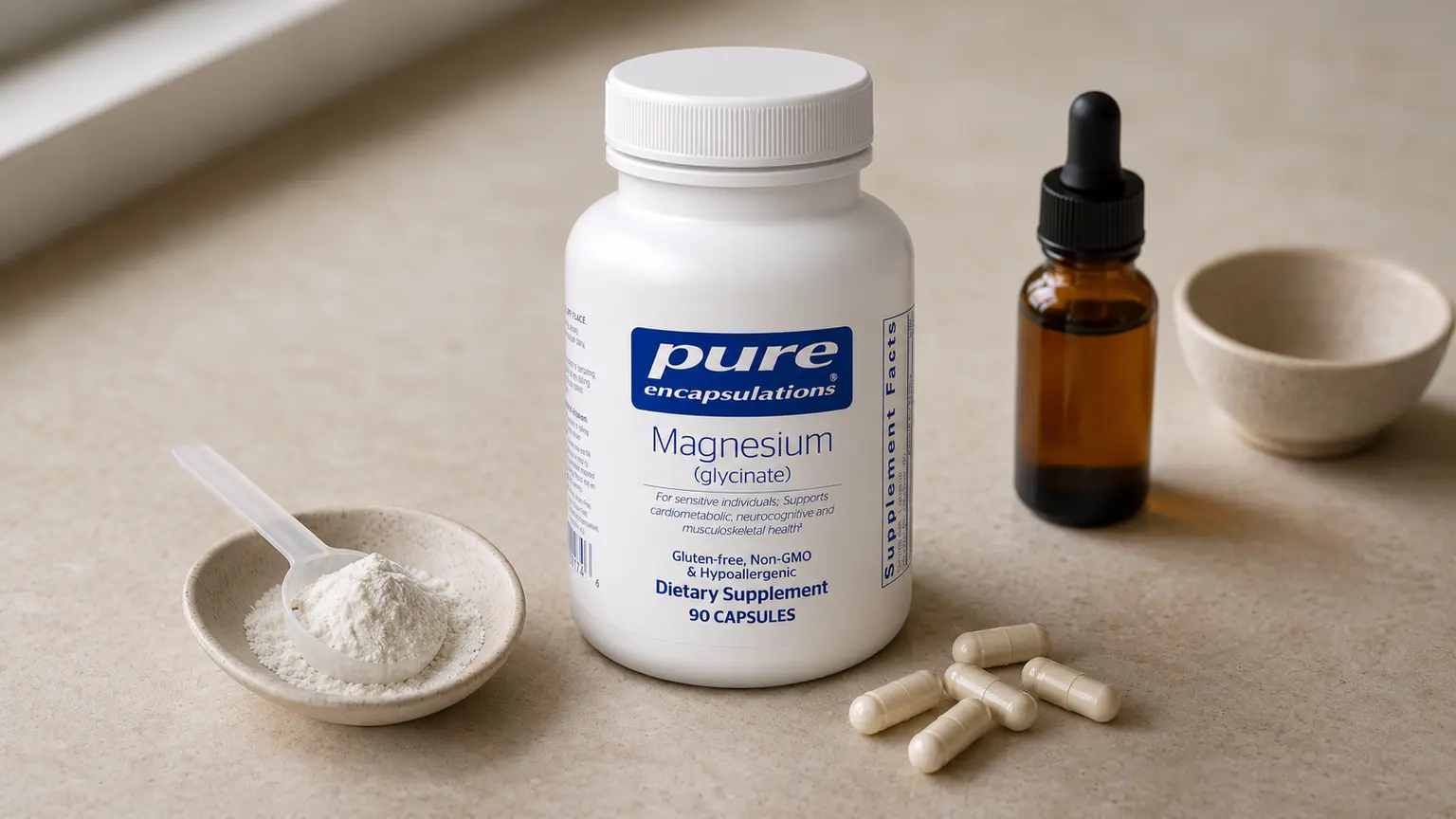
In our store, the glycinate options include Trace Minerals powder ($22.99, 60 servings) and liquid ($24.99, 8 fl oz), Pure Encapsulations, and Metabolic Maintenance (180 capsules, $42.50). For other forms, we carry XYMOGEN magnesium citrate ($35.99) and Dr. Mercola magnesium L-threonate ($108.75).
Safety, side effects, and who should ask first
Magnesium supplements are generally safe for healthy adults at label doses. Kidney disease, certain medicines and pregnancy are reasons to ask a professional before you start.
Side effects to expect
The most common problems are loose stools, nausea and stomach cramping, especially with oxide. If you get them, lower the dose or switch to glycinate. If you have colitis or another bowel condition, get your doctor's approval first, since any form can loosen stools.
Too much magnesium is rare in people with healthy kidneys. Very high doses can cause low blood pressure, an irregular heartbeat and confusion, and the risk climbs when kidneys clear less magnesium.
Medicines and conditions that change the answer
Ask a doctor or pharmacist first if you have kidney disease, take several medicines, are pregnant or breastfeeding, or are treating cancer. Magnesium can interfere with how some medicines work, including certain antibiotics, gabapentin and bisphosphonates. Your pharmacist can tell you how far apart to space them. Some chemotherapy drugs, such as cisplatin, can lower magnesium, and your care team may monitor it.
If you take an antidepressant such as paroxetine (Paxil), do not guess. Ask a pharmacist to review your full list before you add magnesium glycinate. Our pharmacy team answers product questions by phone at 361-853-2061, Monday to Friday, 9am to 6pm CT. For privacy, call rather than putting medical details in our contact form.
Why many doctors stay cautious
Doctors do not usually say no to magnesium. They hesitate because trials are small, and insomnia has many potential causes. Persistent trouble sleeping for more than a few weeks, loud snoring or pauses in breathing deserve a medical visit, not a larger dose.
Magnesium is a reasonable thing to try, but it should never delay a check-up for ongoing sleep problems.
Trying magnesium for sleep, sensibly
Magnesium supplements are a low-risk, modest option for better sleep, most useful if you fall short on intake or deal with night-time tension or cramps. Start low with glycinate, stay under 350 mg of supplemental magnesium a day, track your sleep for a few weeks, and check with a pharmacist or doctor if you take medicines or have kidney or bowel problems.
If you want help choosing a form or a dose, see our magnesium and sleep supplements and ask our pharmacy team any questions before you buy.


 Velix Chat